Tuesday, 24 July 2012

The story in brief

We Can Dance, We Can Swing is a community music work about the women who worked in Dundee’s jute industry in the 1930s. As mill managers tended to lay off boys as their wages were higher than those of their female counterparts, women dominated the work floor. It thus happened that millgirls went out to work, while their husbands stayed at home to look after the family. At its height, up to 50,000 people were employed in Dundee’s jute industry.

The music starts with the millgirls being out in town, dancing and sharing the latest gossip. Eventually, one millgirl steps forward to remind her friends of the other side of their lives, the unhealthy conditions and the difficulties many of them face in feeding their families. The mood changes and the girls unite in a chorus expressing their demands for better pay. Having the confidence to speak up for themselves, the millgirl then puts the girls’ case to the mill manager. In the epilogue, a narrator talks about Mary Brooksbank, one of the woman who in the 20th century raised her voice against the mill management, after which the millgirls reflect on the legacy of the jute industry for their own lives.
 
We Can Dance, We Can Swing, the libretto and music of which are written by Petra Vergunst, is a five-movement work for narrator, choir and ensemble. The choir music is stratified to allow singers with little musical experience to sing in unison and singers with more musical experience to sing solo and harmony. The accompaniment is scored for flexible ensemble, consisting of one instrument in the upper range (e.g. flute), two in the upper middle range (e.g. two violins), and one in the lower range (e.g. cello). The millgirls and mill manager are given their own musical theme that can be distinguished throughout the work. The theme for the millgirls is used in a flexible way to express the jolly, reflective and confident moods in the work respectively. The theme for the mill manager contrasts this.

It is hoped that the workshops in the memory sharing weekend on 25 and 26 August will generate material to fill in the storyline in more detail.

The words and music of We Can Dance, We Can Swing can be listened to at the blogs Friday Night and Still A Young Girl. More blog posts with music will follow.

Copyright text and image Petra Vergunst

Wednesday, 11 July 2012

Sound talk

 The programme for the memory sharing weekend for the Warp and Weft project at Dundee's Verdant Works has now been finalised:
 
Saturday 25 August
Sunday 26 August
11 am    Share a memory:
              Breadwinner


12 pm    Sing a Song

12 pm    Sound Talk

1 pm      Sound Talk

1 pm      Share a Memory:
              Millgirls United

2 pm      Share a Memory:
              Millgirls United

2 pm      Sing a Song
3 pm      Sing a Song

3pm       Share a Memory:
              Breadwinner


In the Share a Memory workshop people who have worked in the jute industry are invited to share their experiences of home life (Breadwinner) and of trade unions and strikes (Millgirls United). Traditional Dundee mill songs will feature in Sing a Song, a workshop open to everyone. In the workshop Sound Talk former millgirls will be invited to tell about the sounds and rhythms on the work floor and the memories these evoke. Each workshop will last around 25 minutes. 
 
For more information about the project, contact Dundee Heritage Trust's Education Officer Brian Kelly at education@dundeeheritage.co.uk or 01382 309078.

Copyright text and image Petra Vergunst

Tuesday, 19 June 2012

Farewell and homecoming

A wave. A roll of the sea that emerges and evaporates like flashes of memories. Waving. A gesture of the hand to say farewell or welcome home. The two interpretations of waving, as a noun and as a verb, are intimately connected. People who sail the sea to fish, hunt whales, and emigrate are waved goodbye and welcomed back home. Voyages may be short or long. Sailors may return home or never turn back. Fisherman and their wives may wave at departure and homecoming. Whalers and their families do so when they embark on sea journeys of up to six months. The waving of emigrants when they turn their back to Scotland in search for fortune in the New World may be much more laden.

Jini Rawlings' exhibition WAVE/ING in Aberdeen Maritime Museum explores the connections of wave as a noun and as a verb. Inspired by journals of Aberdeen trawler skipper Alfred Craig of the 1940s and the journals of Elizabeth Jane Oswald of the 19th century, Rawling sailed to Iceland to film some of the places referred to in these writings and formulate her own response. She captured her experiences in three poetic video installations.

In response to this exhibition I will facilitate a workshop in which we explore traditional Scottish songs of farewell and homecoming of people who travel the seas to fish, hunt whales and emigrate. This drop-in singing workshop for families with children aged 8 and over, will take place in Aberdeen Maritime Museum on Wednesday 18 July from 2 to 4 pm. For more information, contact Aberdeen Maritime Museum at 01224 337700.

Copyright text and image Petra Vergunst

Tuesday, 5 June 2012

Warp and weft

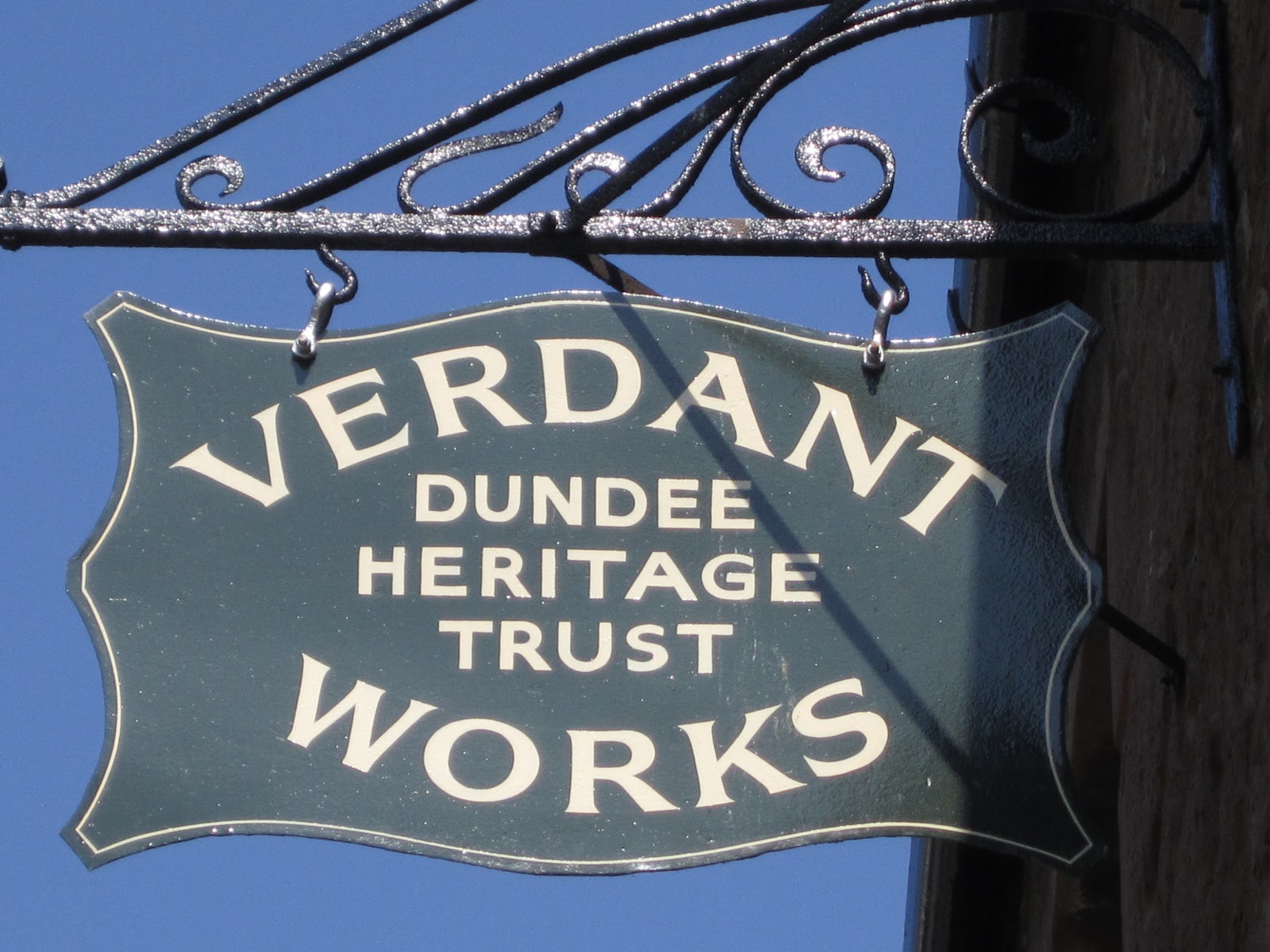
During the past five centuries life in Dundee was geared by the weaving industry. The life stories of men and women formed the weft in the warp of time. In some respects, this fabric of life in Dundee has been different from that in other towns and cities. With the introduction of machine weaving during the Industrial Revolution, the lower wages for women meant that mill girls replaced men in the jute mills, their husbands now staying at home to look after the children. Being breadwinners gave women a voice. In the community music project Warp and Weft, I will work together with Dundee Heritage Trust to compose a piece of music for voice that relates the story of Dundee women, and that will be rehearsed and performed at a public event at Verdant Works on Saturday 27 October. This project, commissioned by Dundee Heritage Trust with money from Dundee’ Weaver Craft, will start with a memory sharing weekend to inform the story on which the composition will be based.

Dundee Heritage TrustThis memory sharing weekend will take place on 25 and 26 August at Verdant Works. Dundee women are encouraged to bring their daughters, granddaughters, mothers and grandmothers along to share their stories about the way the jute industry shaped their lives in the mills and at home. There will be a special exhibition to celebrate 500th anniversary of Dundee’ Weaver Craft and workshops that will explore the characteristic sounds of the jute mills, invite former mill girls to tell stories inspired by objects related to the mills, and share traditional Dundee weaving songs.

Links to other blogs on the Warp and Weft project:
Sound talk
The story in brief
Alternative voices
Singers and players wanted
Friday night

Still a young girl 
Higher wages
Among them
Earn a wage

Copyright text and image Petra Vergunst
Monday, 28 May 2012

Authorship

As a community musician, I am as concerned about the impact of my projects on communities as the musical side of things. Many of my community music projects aim to contribute to community development by bringing people together as opposed to participants’ personal development only. The question is how the impact of community development on communities can be understood and how the set-up of my projects influences these outcomes.

I consider my community music projects to intervene in communities. Such intervention is intentional in that I aim to bring about a certain social or cultural change. The Parallel Lives project aimed at enhancing the participants' understanding of the experiences of people from Central and Eastern Europe in their community, thereby improving community relations. The Culter Mills project aimed at enhancing people’s feelings towards their community.

Yet, the two projects had a different set-up. In the Parallel Lives project participants themselves wrote the songs. Though the transfer of authorship to the participants meant perhaps a less pleasing musical outcome, it did mean that the participants took complete ownership of the project. As a result, their understanding of the experiences of people from Central and Eastern Europe in their community was raised. The process of writing the songs together also boosted their confidence in their musical abilities. In the Culter Mills project the songs were written by myself on basis of the memories of former mill employees. Rather than expressing their ownership of the composition process, the participants said the songs captured their experiences and feelings and this made them feel important.

The question whether or not to transfer authorship to a community involves considerations about the relative importance of process and outcome in a given community music project. If time is limited less may be achieved musically if participants write songs themselves, but this may weigh up against the ownership they may take of the process and the subsequent social and cultural changes achieved. Writing the music for a community on basis of materials provided by them may generate an outcome that is perhaps musically more pleasing and that holds up a mirror for participants through which they re-evaluate aspects of their life. 

In practice, the question who is to write the songs goes hand in hand with considerations about participation. The transfer of authorship often involves a higher degree of commitment and some degree of confidence in one’s ability to contribute to a creative process. This may work well if working with existing groups. In practice, many people find it difficult to make longer-term commitment involved in joining a new, project-related group. They therefore prefer one-off events in which they are presented with a finished piece of music.

Copyright text and image Petra Vergunst

Thursday, 10 May 2012

Singing together

Yesterday, the intergenerational choir project culminated in a performance for family and friends during an Open Afternoon at Tullos Primary. A major achievement indeed. Not only did we learn to sing together, for many participants it was also the first time they sang outside their home. The performance not only showed musical achievements, it also revealed the joy pupils, parents and grandparents had in singing together and making new friends.

Above two photos taken during the dress rehearsal.

Copyright text Petra Vergunst and copyright images Petra Vergunst and Joss Atkin

Thursday, 26 April 2012

Charr Bothy

‘Oh Bachlein, meiner Liebe
Was bist du wunderlich
Will’s Ja nicht weiter sagen
Sag Bachlein, liebst du mich?
Sag Bachlein Liebst du mich?’

(Schubert: Die Schone Mullerin)

Charr Bothy, a place to take a rest when walking in Glen Dye. The bothy overlooks the merger of the Water of Charr and the Water of Dye on the flat lands where sheep graze in spring. Though the bothy invites the walker to pause, the repetitive rhythm of footsteps, uphill and downhill, keep resounding. 

This bothy often reminds me of the passage in Schubert’s Die Schone Mullerin in which the singer projects his feelings on to the river. Desperate to know whether the miller’s daughter loves him, the singer wants the river to confirm that this is the case. In a truly romantic fashion, the river provides solace for the singer. When thinking about how I, and other walkers, feel towards the bothy, I feel a strange tension. Following the Water of Dye, we seek out the bothy for shelter from the weather or for the night. It is not the river that provides solace, but a sturdy building that invites us to rest our feet for a moment. 

In my composition for solo piano I’ve taken inspiration from Schubert’s song. For the walking theme I've used the first phrase of Schubert’s song as a series. This theme is repeated in an almost minimalist fashion to suggest the mesmerising effect of walking. Gradually, this become freer and more lyrical to express the fragments of thought that the activity releases. 


 Copyright text and music Petra Vergunst